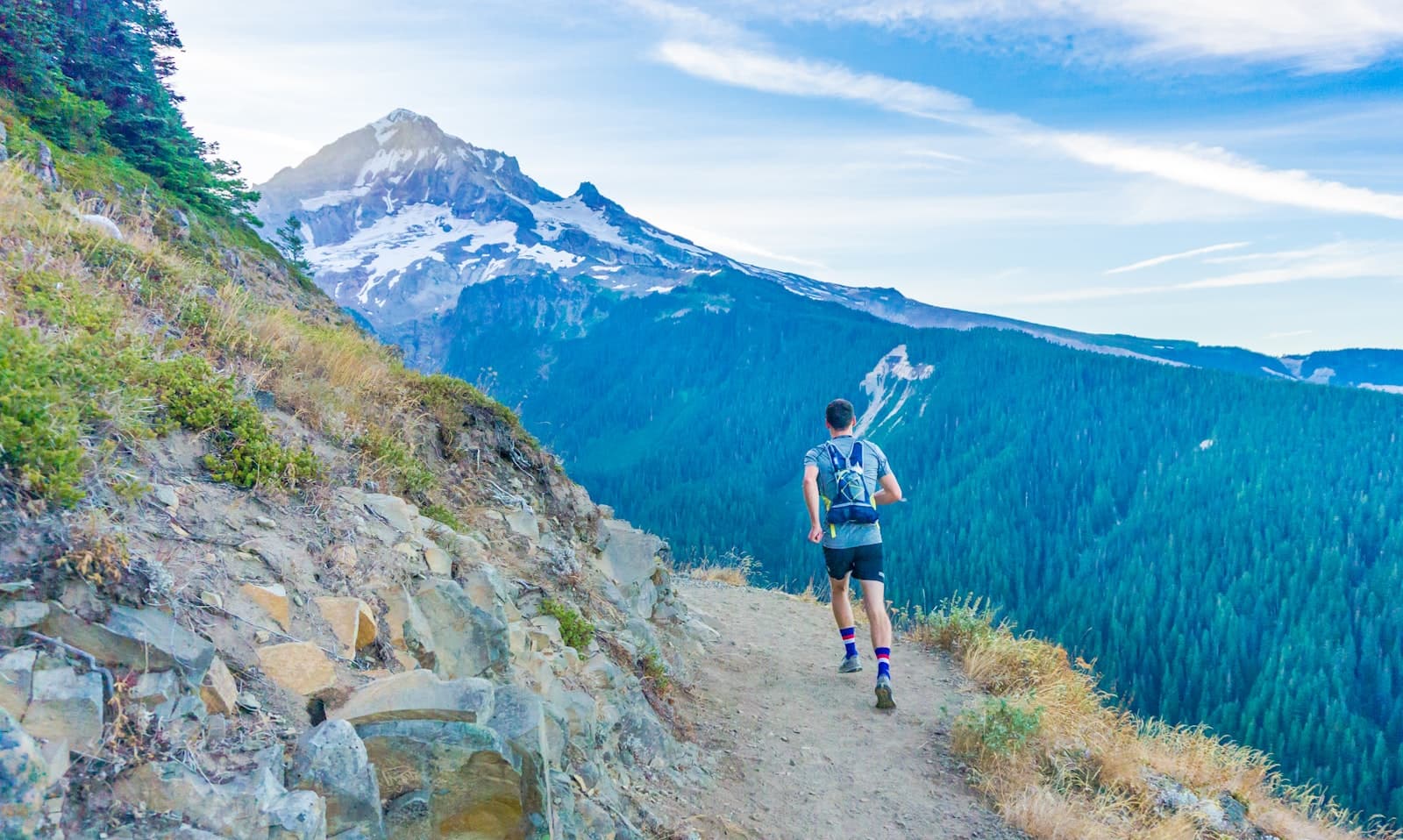
I don't run to get faster. I run to get out.
Road running has its place — it's honest, measurable training. But the trail asks for something different, and gives back something you can't get on tar: your attention, undivided. You cannot zone out on technical ground. Every step is a small decision — root, rock, loose gravel, the wet slab you should not trust. Ten minutes in, the mental chatter simply stops, because there's no spare capacity left to worry with.
The empty ridgeline
The best runs start before light, when the mountain is still cold and there's no one else on it. You climb in the dark, breathing hard, and then the top of the ridge catches the first sun and the whole valley opens up beneath you, empty.
That emptiness is the reason I go. Not to escape people I dislike — to escape the version of myself that's always half-online, half-here. Out there, there's only here.
If you're starting
You don't need much, and that's part of the appeal:
- Shoes with real grip. Road shoes on a wet trail will hurt you.
- Walk the climbs. Everyone runs the flats and hikes the steep bits. Ego is heavy.
- Tell someone your route. Solitude and stupidity are different things.
Start small. A quiet hour on a trail near home will do more for your head than a week of scrolling about it. The wild is closer than you think — usually just past where the path stops being convenient.